PSTA manages Palm Beach County’s most difficult reconstructive problems.
Complex wounds. Exposed hardware. Failed healing. Hand and nerve injuries. Limb-threatening trauma. Cases that require more than routine care.
Before accepting that nothing more can be done, request catastrophic reconstructive review.
A second opinion does not mean the prior team was wrong. It means the case has been reviewed through the full reconstructive lens — by surgeons who routinely manage catastrophic injury.
How to Request Catastrophic Reconstructive Review
PSTA second opinions are available in three ways. Most patients outside the hospital do not need admission or transfer.
▶ Outpatient — Delray Advanced Wound Center
Most second opinions for wounds, postoperative breakdown, and soft-tissue injuries can be seen here.
No hospital admission required.
Appropriate for patients who have been discharged, are in outpatient wound care, or are managing a work injury outside the hospital.
▶ Inpatient — Delray Medical Center
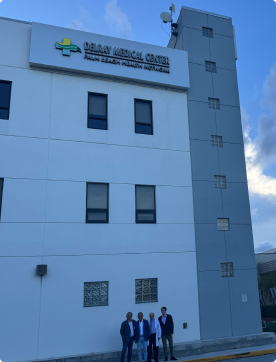
If the patient is currently admitted to Delray Medical Center, PSTA can be consulted as an inpatient service.
Ask the attending physician, hospitalist, or charge nurse to place a plastic surgery consultation.
No transfer required.
▶ Attorney, Adjuster, and Case Manager Referrals
PSTA accepts referrals for catastrophic reconstructive review in work injury, workers’ compensation, and related cases.
PSTA also accepts independent medical evaluation (IME) referrals. Contact the office directly for that pathway.
Clinical review only. Not legal advice.
Whether the patient is in the hospital, recently discharged, or managing a work injury through a compensation system, catastrophic reconstructive review is accessible. Contact PSTA directly if you are unsure which pathway applies.
What Catastrophic Reconstructive Review Looks For
A catastrophic reconstructive second opinion is a clinical review of whether the diagnosis, treatment plan, follow-up pathway, reconstructive options, and functional recovery plan have been fully considered.
A reconstructive second opinion may help clarify:
- what the injury actually involves and whether the current diagnosis is complete
- whether healing is progressing as expected
- whether exposed structures — tendon, bone, hardware, implant material — require coverage
- whether hardware is threatened
- whether nerve injury is being fully addressed
- whether tendon function is being protected
- whether hand function has been properly evaluated
- whether additional reconstruction should be considered
- whether the wound has crossed a surgical threshold
- whether delay may narrow options
- whether follow-up is being handled by the appropriate specialist
- whether the patient has a realistic recovery plan
The question is not whether the prior team did anything wrong. The question is whether the full reconstructive picture has been reviewed by the right specialist.
When “Nothing Else Can Be Done” May Not Be the End
In catastrophic injury care, “nothing else to offer” may mean different things.
It may mean the injury has truly reached the limits of safe reconstruction.
It may also mean the current pathway has reached the limits of that setting, specialty focus, authorization structure, or available infrastructure.
Those are not the same thing.
Complex reconstruction often begins after the first plan has failed, stalled, or reached a dead end. An evaluation does not guarantee that reconstruction is possible. But it may clarify whether options still exist.
This may include:
- failed wound healing or closure
- exposed hardware that was not covered durably
- threatened limb salvage
- traumatic amputation questions
- failed prior closure or graft
- nerve injury with uncertain recovery
- tendon injury affecting function
- hand dysfunction after initial treatment
- scar contracture limiting motion or function
- postoperative wound breakdown
- complex work injury with stalled recovery
In serious injury, accepting a dead end without specialist review is the risk. The safer question is: has this case been evaluated by surgeons who routinely manage catastrophic reconstructive problems?
Why Plastic and Reconstructive Surgery May Matter
Plastic surgeons are trained in soft-tissue reconstruction. That does not mean every injury needs surgery. It means complex injuries can be evaluated across a broader reconstructive map:
- Continued observation (when that is the correct level)
- Wound care
- Debridement
- Delayed closure
- Skin grafting
- Local tissue rearrangement and flap coverage
- Nerve reconstruction
- Tendon coverage and reconstruction
- Muscle flap coverage
- Microsurgical tissue transfer
- Staged reconstruction
- Referral to another specialist when appropriate
The value of reconstructive review is not choosing the biggest intervention. The value is knowing what level of care the injury actually needs — and whether the current plan reflects that judgment.
Hand and Nerve Reconstruction When Function Is on the Line
Hand and nerve injuries are different because small failures can create major disability. A wound may close, but the hand may not work. The bone may heal, but sensation may not return. The skin may survive, but tendon glide may fail. The limb may be saved, but function may be lost.
PSTA evaluates complex hand and nerve injury in the context of the full reconstructive problem:
- skin and soft-tissue coverage
- tendon injury and reconstruction
- nerve injury and repair timing
- bone and joint injury
- scarring and stiffness
- exposed structures
- therapy timing and sequencing
- functional recovery planning
- future reconstruction needs
Nerve injury is especially timing-sensitive. Unrecognized or improperly sequenced nerve injury may result in irreversible motor deficit despite otherwise successful limb preservation. The window for nerve reconstruction can define whether salvage achieves meaningful use.
⚠ Verify nerve reconstruction timing claims against current published PSTA materials before publication.
For complex hand and nerve injuries, the question is not only “Is the wound healing?” The better question is:
Is the injury being managed to preserve function — and has that question been reviewed by a reconstructive specialist?
Common Injury Second Opinion Cases
Complex wounds
Wounds that are not improving may need review beyond dressing selection. The question is whether the wound has crossed into reconstructive territory — requiring evaluation of tissue viability, perfusion, exposed structures, dead space, or closure options.
“Has this wound been reviewed by a reconstructive specialist, not just dressed and monitored?”
Exposed hardware
Exposed plates, screws, rods, joint implants, or spine instrumentation may require soft-tissue coverage and coordination with the original surgical team. A dressing may cover exposed hardware. It does not necessarily solve the structural problem.
“Has a reconstructive plastic surgeon reviewed whether durable soft-tissue coverage is needed?”
Postoperative wound breakdown
A surgical incision that opens may reflect infection, poor perfusion, tension, dead space, fragile tissue, or deeper structural risk. The question is not only how to dress the wound. The question is why the closure failed and whether a reconstructive plan is needed.
“Is the wound being managed, or is there a plan to close it durably?”
Hand trauma
Hand injuries may involve tendon, nerve, vessel, bone, joint, skin, scar, and therapy problems. Small differences in planning can affect function. A second opinion may help clarify whether the current plan fully addresses hand function, nerve recovery, tendon glide, stiffness, and future reconstruction.
“Has the hand been evaluated for function — not just anatomy and wound closure?”
Nerve injury
Nerve injuries may require timing-sensitive evaluation. Options may include observation, therapy, decompression, repair, grafting, transfers, or staged functional planning. The question is whether the nerve injury has been properly characterized and whether the timing window has been acknowledged.
“Has the nerve injury been evaluated for reconstructive options, and is the timing window being tracked?”
Tendon injury
Tendon injuries may involve repair, reconstruction, adhesions, tendon glide, soft-tissue coverage, therapy timing, scarring, and long-term function. The question is whether the tendon problem has been reviewed in the context of the surrounding soft tissue and recovery plan.
“Has the tendon been evaluated in the context of the full recovery plan, including soft-tissue coverage and therapy sequencing?”
Crush injury
Crush injuries can involve skin, muscle, nerves, vessels, tendons, bone, swelling, compartment pressure, and scarring. These cases may require staged reconstruction and long-term functional planning.
“Has the full reconstructive strategy been mapped for this injury — not just the acute management?”
Scar contracture and functional limitation
A scar is not always cosmetic. It may restrict motion, cause pain, limit function, or require release and reconstruction. For injury cases, the functional impact of scar tissue matters for return to work, daily life, and future recovery.
“Has the scar been evaluated for functional impact, not just appearance?”
Limb salvage and soft-tissue loss
When tissue loss threatens function, hardware, bone, mobility, or limb preservation, reconstructive review can help define whether salvage options remain available.
“Has the plan addressed not only survival of tissue, but durable function?”
Work Injury Second Opinions
Work injuries often get evaluated through administrative systems: approved doctors, network rules, utilization review, adjusters, nurse case managers, treatment authorization requirements, and return-to-work pressure.
Those systems exist for a reason. They are not a substitute for reconstructive judgment.
Administrative routing is not the same as clinical matching. For complex wounds, exposed hardware, hand trauma, nerve injury, tendon injury, failed healing, or functional loss, the clinical question should come first: who is most appropriate to evaluate and follow this injury?
A work injury may need a second opinion when there is:
- a wound that is not healing
- exposed hardware
- postoperative wound breakdown
- hand trauma affecting function
- nerve injury with uncertain or incomplete evaluation
- tendon injury
- crush injury
- scar contracture limiting motion or function
- soft-tissue loss
- functional limitation with unclear recovery plan
- disagreement about work restrictions or future care
- concern that the patient is being routed away from appropriate local expertise
- concern that follow-up is being redirected to walk-in or generic care after a serious injury
When Administrative Routing May Not Serve the Patient
This section addresses a specific clinical concern, not a general criticism of workers’ compensation systems. Many adjusters and case managers work to connect patients with appropriate care. The concern here is about situations where administrative structure may drive referrals that do not match the clinical complexity of the injury.
Cost control is not the same as clinical necessity
Workers’ compensation systems use networks, preferred providers, contracted referral pathways, utilization review, and authorization rules to organize care. Some of that is appropriate for minor injuries.
But complex injuries are not interchangeable. For serious wounds, exposed hardware, failed healing, hand trauma, nerve injury, tendon injury, or catastrophic reconstruction cases, the clinical question should come first:
Who is most appropriate to evaluate and follow this injury? A lower-cost referral pathway may serve the payer. It does not prove it serves the patient.
Out-of-area transfer
Sometimes traveling to another city is the right medical decision. A patient may need a subspecialist, procedure, or level of experience that is not available locally.
But when experienced reconstructive surgeons are available in Palm Beach County, transfer should have a clinical reason. Not just network convenience. Not just contract pricing.
For an injured patient, being sent to another city can mean delayed evaluation, missed work, transportation burden, family disruption, fragmented communication, delayed wound response, difficulty coordinating therapy, and practical pressure to accept less follow-up than the injury requires.
If the reason for transfer is administrative routing rather than clinical necessity, that should be stated clearly. The patient, attorney, employer, adjuster, and case manager can then evaluate whether the transfer serves the injury — or primarily serves the payer.
Walk-in follow-up is not surgical continuity
Walk-in clinics may be appropriate for minor injuries, medication checks, or simple wound checks. But after complex trauma, wound reconstruction, exposed hardware, tendon injury, nerve injury, hand trauma, crush injury, or soft-tissue loss, follow-up should be directed by the physician or specialty team responsible for the injury.
The treating surgeon or reconstructive specialist understands the injury, the tissue quality, the repair, the risk points, and the warning signs. A walk-in clinic may not. Follow-up is treatment, not paperwork.
If a patient is being redirected away from the treating surgeon after complex injury care, it is reasonable to ask: is this follow-up plan clinically appropriate, or is it simply a lower-level administrative pathway?
Patient preference
Workers’ compensation referrals may be described as patient preference. Patient preference is meaningful when the patient made an informed choice — because of a prior relationship, trusted referral, or specific expertise need.
In trauma and complex injury care, patients often do not know the surgeons before the injury. If a patient is being sent to an unknown physician in another city while experienced reconstructive surgeons are available locally, it is reasonable to ask whether the referral reflects informed patient choice, clinical necessity, network direction, or administrative routing.
Asking that question is not an accusation. It is about clarity.
Scripts for Patients, Attorneys, and Case Managers
All scripts are appropriate, non-accusatory, and focused on clinical clarity.
For patients — before being sent out of the area:
Standard version:
“I am not refusing care. Before I am sent to another city, I want to understand whether this referral is clinically necessary. If experienced reconstructive surgeons are available locally, has my case been reviewed here first? Is this being done because the out-of-area provider is the best clinical match for my injury, or because that pathway is administratively preferred?”
Stronger version:
“I am not refusing care. I am asking whether this transfer is clinically necessary. If local reconstructive expertise is available, please explain what the out-of-area provider offers that is not available here. If this referral is based on network status, contract pricing, payer preference, or administrative routing rather than clinical necessity, please document that clearly.”
For patients — before being sent to walk-in follow-up after serious injury:
Standard version:
“I am not refusing follow-up care. I am asking for follow-up with the treating surgeon or appropriate reconstructive specialist because this was a serious injury. Please document why a walk-in clinic is medically appropriate instead of surgeon-directed follow-up.”
Stronger version:
“Given the complexity of my injury, I do not believe generic walk-in follow-up is an appropriate substitute for follow-up with the treating surgeon. I am requesting authorization for surgeon-directed continuity of care.”
For attorneys and case managers — challenging out-of-area transfer:
Standard version:
“Please identify the clinical basis for directing the patient out of the local area despite available local reconstructive expertise. If this decision is based on network status, contract pricing, payer preference, or administrative cost control rather than clinical necessity, please state that clearly. We are requesting local reconstructive review before out-of-area transfer is required.”
Stronger version:
“Please identify the clinical basis for transferring the patient out of the local area despite available local reconstructive expertise, and for redirecting follow-up away from the treating surgeon to a walk-in clinic. If these decisions are based on network status, contract pricing, payer preference, or administrative cost control rather than clinical necessity, please state that clearly. We are requesting local catastrophic reconstructive review and surgeon-directed continuity of care.”
For patients — requesting a second opinion:
Standard version:
“I would like to request a second opinion from Plastic Surgery Trauma Associates. Can a consultation be arranged at the Delray Advanced Wound Center, or as an inpatient consultation at Delray Medical Center if I am admitted?”
What Happens During an Injury Second Opinion?
A reconstructive second opinion may include:
- review of the injury history and prior treatment
- wound or injury examination
- review of imaging, operative reports, and therapy notes when available
- assessment of tissue quality and function
- evaluation of exposed structures or hardware risk
- review of follow-up needs and therapy plan
- discussion of reconstructive options
- recommendation for continued care, further evaluation, or surgical planning when appropriate
The result may be:
- confirmation that the current plan is appropriate
- recommendation for continued observation or wound care
- recommendation for additional imaging or testing
- recommendation for therapy changes
- recommendation for surgeon-directed follow-up
- recommendation against walk-in follow-up if specialist care is needed
- recommendation for debridement, closure, grafting, flap coverage, nerve reconstruction, tendon reconstruction, or staged reconstruction
- recommendation for referral to another specialist
- clarification of future care needs and return-to-work implications
A second opinion does not automatically mean surgery. It means the case has been reviewed through the reconstructive lens — and the patient has a more informed answer about what the injury requires.
Who Should Consider an Injury Second Opinion?
Consider catastrophic reconstructive review if:
- the injury is not improving
- the wound is not healing
- the patient was told nothing more can be done
- the patient is being sent out of the area for care
- the patient is being sent to walk-in follow-up after serious trauma
- the treatment plan seems incomplete
- there is exposed hardware, tendon, bone, or implant material
- there is hand dysfunction
- there is numbness, weakness, or suspected nerve injury
- there is tendon dysfunction affecting grip, motion, or use
- there is soft-tissue loss
- there is recurrent infection
- there is postoperative wound breakdown
- there is disagreement about work status or recovery expectations
- future care is unclear or undefined
- the patient or family wants to know whether reconstructive options exist
For Attorneys, Adjusters, Employers, and Case Managers
This service is for clinical reconstructive review. It is not legal advice. It is not advocacy masquerading as medicine.
A PSTA reconstructive review may help clarify:
- diagnosis and injury severity
- wound status and tissue viability
- treatment necessity and reconstructive options
- surgical timing and staging
- future care needs
- functional implications and return-to-work limitations
- whether additional evaluation is medically reasonable
- whether out-of-area referral is clinically necessary
- whether walk-in follow-up is appropriate for this injury
- whether surgeon-directed continuity should be preserved
- whether the current plan addresses the full injury
PSTA also accepts independent medical evaluation (IME) referrals for workers’ compensation and legal cases. Contact the office directly for that pathway.
FAQ
No. This is clinical surgical review. It does not provide legal advice or case strategy.
No. A second opinion may confirm the current plan is appropriate. It may also identify additional options or clarify whether reconstructive care should be considered. Either outcome is useful to the patient.
It may help clarify the medical issues: diagnosis, wound status, injury severity, treatment options, functional limitations, future care needs, and whether reconstructive evaluation is appropriate. For legal strategy in a workers’ compensation case, speak with your attorney.
Yes. Patients may ask whether local reconstructive review is appropriate before traveling elsewhere, especially when complex wound or reconstructive expertise is available locally.
That may be correct. But serious reconstructive conclusions should be made after the full injury has been reviewed by a specialist who routinely manages catastrophic problems. Catastrophic reconstructive evaluation may clarify whether additional options exist — or confirm that the current plan is appropriate.
Yes. Patients may ask whether local reconstructive review is appropriate before traveling elsewhere, especially when complex wound or reconstructive expertise is available locally.
That may be correct. But serious reconstructive conclusions should be made after the full injury has been reviewed by a specialist who routinely manages catastrophic problems. Catastrophic reconstructive evaluation may clarify whether additional options exist — or confirm that the current plan is appropriate.
Follow the requirements of your case and speak with your attorney or case representative if you have one. From a clinical standpoint, patients may still ask whether a local reconstructive second opinion is appropriate, especially when the injury is complex or the proposed referral requires out-of-area travel.
Patient preference is meaningful when the patient made an informed choice. If you did not specifically request that physician, you may ask whether the referral reflects actual patient preference, medical necessity, network direction, or administrative routing. Those are different things.
Sometimes, for minor injuries. But after complex trauma, wound reconstruction, exposed hardware, tendon injury, nerve injury, hand trauma, crush injury, or soft-tissue loss, walk-in follow-up may not be an adequate substitute for surgeon-directed continuity of care.
No. A second opinion is an evaluation. Surgery may or may not be appropriate. PSTA may confirm the current plan, recommend conservative management, or identify a need for additional reconstruction — depending on what the injury requires.
No. This page is for informational and educational purposes only. It does not provide medical advice, diagnosis, legal advice, or case strategy. It does not create a physician-patient relationship or attorney-client relationship. Medical decisions require direct evaluation by licensed healthcare professionals.
Before You Accept
“Nothing Else Can Be Done,”
Get Catastrophic Reconstructive Review.
If you have a serious wound, work injury, exposed hardware, failed healing, hand trauma, nerve injury, tendon injury, soft-tissue loss, threatened limb, postoperative breakdown, or complex recovery problem — request clinical reconstructive review.
The current plan may be correct. But if the injury is catastrophic, stalled, worsening, or being redirected away from specialist care, it deserves the right review.
Do not accept a final answer until the full reconstructive picture has been evaluated.