Exposed Hardware Reconstruction
Hospital-based reconstruction for exposed orthopedic hardware, exposed spinal instrumentation, postoperative wound breakdown, and complex soft tissue failure.
Exposed hardware is not a dressing problem.
When orthopedic hardware or spinal instrumentation becomes exposed, the wound may involve soft tissue failure, contamination risk, dead space, infection concern, tissue loss, and mechanical stress across a prior surgical site.
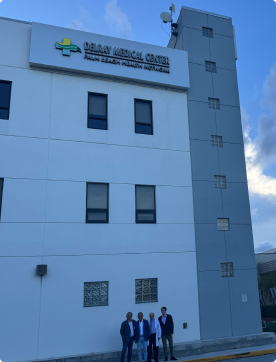
Plastic Surgery Trauma Associates evaluates exposed hardware and complex postoperative wound failure through a hospital-based reconstructive framework within a Level I trauma environment.
Trauma Transfer: 855-952-7246
When Hardware Exposure Changes the Problem
A wound over hardware is different from a simple open wound.
Once plates, screws, rods, joint implants, or spinal instrumentation are exposed or threatened, the treatment goal is no longer surface closure alone. The reconstructive objective is durable vascularized coverage that protects the underlying reconstruction, reduces dead space, and supports the biologic environment needed for healing.
Exposed hardware may occur after trauma, orthopedic fixation, spine surgery, joint reconstruction, postoperative infection, soft tissue necrosis, or failed prior closure.
These cases require coordinated assessment, not routine dressing escalation.
Trauma Transfer: 855-952-7246
Common Referral Scenarios
Evaluation may be appropriate when a wound involves:
- exposed plate, screw, rod, nail, wire, or spinal instrumentation
- wound breakdown over orthopedic hardware
- open fascia with exposed spinal hardware
- persistent drainage after orthopedic or spine surgery
- failed prior wound closure
- soft tissue necrosis over hardware
- recurrent wound reopening
- infection concern around instrumentation
- traumatic wound with exposed bone or hardware
- hardware threatened by fragile or failing soft tissue
- postoperative wound that is not progressing despite standard care
Early evaluation may preserve reconstructive options before tissue loss, infection burden, or hardware instability progresses.
Why Exposed Hardware Requires Reconstruction
Hardware exposure is rarely just a skin problem.
Management must account for:
- hardware stability
- soft tissue viability
- infection burden or contamination risk
- dead space
- local vascularity
- prior incisions and scarred tissue planes
- bone or instrumentation exposure
- mechanical stress across the wound
- patient healing risk
- need for staged reconstruction
Procedure-level descriptions often fail to capture the true reconstructive problem. A wound over hardware must be evaluated by the tissue environment, the stability of the underlying reconstruction, and the consequences of failure.
Exposed Spinal Hardware & Open Fascia
Exposed spinal hardware is a high-consequence reconstructive problem.
When the fascia is open and instrumentation is exposed, the wound must be treated as a reconstructive failure involving the prior operative field, hardware, dead space, contamination risk, tissue viability, and the mechanical forces transmitted across the spine.
Plastic Surgery Trauma Associates evaluates a substantial annual volume of postoperative spine wound failures, including cases involving open fascia, exposed instrumentation, persistent drainage, infection concern, and failed prior closure.
This clinical volume informs the staged spinoplastic pathway used for complex spine wound salvage.
Staged Spinoplastic Salvage Pathway
When spinal instrumentation is exposed or threatened, management generally proceeds through staged operative reconstruction.
The first stage typically involves operative debridement and washout of the prior surgical site and exposed instrumentation. Nonviable tissue is removed. The wound bed is reassessed. The hardware environment is cleaned under direct operative conditions.
When appropriate, a Veraflo negative pressure wound therapy system is placed for interval wound management. This allows controlled instillation and evacuation across the wound bed, commonly using saline or dilute Dakin’s solution, for a defined interval before return to the operating room.
This staged interval reduces wound bioburden, allows reassessment of tissue viability, and prepares the site for definitive plastic surgical muscle flap closure.
Definitive Muscle Flap Closure
Definitive spinoplastic closure brings vascularized tissue, commonly muscle, directly over the previously exposed or threatened hardware.
This matters because vascularized tissue changes the biology of the wound environment.
Muscle flap coverage may:
- improve local tissue perfusion
- obliterate dead space
- protect spinal instrumentation
- support antibiotic delivery
- improve immune access to the compromised field
- reduce mechanical stress across the closure
- create a more durable soft tissue construct than skin-level repair alone
The objective is not to close skin over hardware.
The objective is to reconstruct a vascularized soft tissue layer capable of protecting instrumentation under the mechanical stresses of daily activity.
Extremity Hardware Exposure
Exposed extremity hardware presents a similar reconstructive problem in a different anatomic environment.
Open fractures, crush injuries, degloving injuries, postoperative breakdown, and failed prior closure may leave plates, screws, rods, or fixation devices exposed or threatened by unstable soft tissue.
Durable reconstruction may require staged debridement, infection-risk coordination, orthopedic assessment, perfusion-aware planning, local or regional flap coverage, or microsurgical free tissue transfer when defect size, location, or vascularity requires it.
The goal is structural preservation: protect hardware when biologically feasible, restore durable vascularized coverage, and reduce progression toward chronic infection, repeated failure, or limb-threatening deterioration.
Primary High-Risk Closure
Exposed hardware reconstruction is not limited to salvage after failure.
Plastic Surgery Trauma Associates is often asked to perform similar vascularized soft tissue closure during primary or revision surgery when wound-failure risk is elevated from the outset.
Primary or planned flap closure may be considered in selected patients with:
- revision surgery
- long-segment spinal instrumentation
- prior wound breakdown
- prior radiation
- infection history
- poor soft tissue envelope
- dead space risk
- high-tension closure
- multiple prior operations
- frail or geriatric tissue
In these cases, planned vascularized closure functions as a risk-mitigation strategy. The same principles apply: blood-flow-bearing tissue, dead space reduction, tension redistribution, hardware protection, and durable closure over a high-stress operative field.
Hospital-Based Reconstruction
Exposed hardware often requires more than outpatient wound care.
High-consequence cases may require operating room access, anesthesia support, orthopedic or spine surgery coordination, infection-risk management, inpatient monitoring, and staged reconstructive planning.
Plastic Surgery Trauma Associates provides this care through a hospital-based reconstructive framework connected to Level I trauma infrastructure.
When the wound can be managed through outpatient follow-up, care may continue through the appropriate wound pathway. When escalation is required, hospital-based reconstruction is coordinated through the PSTA trauma reconstruction framework.
When to Request Consultation
Consultation should be considered when hardware is exposed, threatened, or covered by failing soft tissue.
Referral is appropriate for:
Primary or planned flap closure may be considered in selected patients with:
- exposed orthopedic hardware
- exposed spinal instrumentation
- open fascia after spine surgery
- persistent drainage over hardware
- failed prior closure
- postoperative wound breakdown
- traumatic wounds with exposed bone or fixation
- soft tissue necrosis over instrumentation
- infection concern around hardware
- high-risk primary closure requiring flap planning
Early consultation may preserve reconstructive options. Delay can narrow them.
Professional Referral
ExposedHardware.com is a focused educational and referral landing page maintained by Plastic Surgery Trauma Associates.
For exposed hardware, spinal instrumentation exposure, postoperative wound breakdown, or complex soft tissue failure:
Plastic Surgery Trauma Associates provides this care through a hospital-based reconstructive framework connected to Level I trauma infrastructure.
When the wound can be managed through outpatient follow-up, care may continue through the appropriate wound pathway. When escalation is required, hospital-based reconstruction is coordinated through the PSTA trauma reconstruction framework.
For urgent hospital transfer or trauma-system escalation:
Tenet Transfer Center
Available 24/7Tenet Transfer Center
For full trauma reconstruction program information, visit injurysecondopinion.com/exposedhardware.
FAQ
It can be. Exposed orthopedic hardware or spinal instrumentation should be evaluated promptly because the wound may involve contamination risk, infection concern, dead space, tissue failure, or instability of the underlying reconstruction.
Sometimes temporary wound care may be used while a plan is developed, but exposed or threatened hardware often requires operative evaluation. Dressing care alone may be insufficient when instrumentation, dead space, infection risk, or progressive tissue loss is present.
A muscle flap brings vascularized tissue over the exposed or threatened hardware. This can improve local biologic access, help obliterate dead space, support antibiotic delivery, and create a more durable soft tissue layer.
Veraflo is a negative pressure wound therapy system that allows controlled instillation and removal of solution across the wound bed. In selected exposed-hardware cases, it may be used between debridement and definitive flap closure.
Spinal hardware exposure involves the spine construct, fascia, dead space, infection risk, mechanical stress, and need for coordination with spine surgery. It cannot be evaluated by skin appearance alone.
Consultation should be considered when hardware is exposed or threatened, drainage persists, fascia is open, a prior closure has failed, or wound progression risks infection, hardware loss, or further reconstruction.